Crazy Rush 3D: Race Master
- 3.8
- Rating
- 50.00M
- Installs
- Free
- Price
 Analysis by App-foxy
I spent time with Crazy Rush 3D: Race Master as a quick-play racing game, and my first impression was clear: it is built around immediate action rather than a deep driving simulation. You are placed in a mad street-racing setting where police pursuit and car crashes create the main tension. That makes it easy to understand within moments, but it also means the game asks for quick reactions and a willingness to accept a fairly hectic pace.
Developed by CASUAL AZUR GAMES, this free racing game is aimed at players who want short bursts of entertainment on Android or iOS rather than a long, methodical campaign. It carries a Teen content rating, so parents should consider whether its crash-focused presentation and chase atmosphere suit the player. I found it most appealing when I wanted something I could open, play briefly, and put down without preparing for a complicated session.
The game has an average rating of 3.8 from around twelve thousand ratings and has passed ten million installs. Those figures suggest that its simple premise reaches a broad audience, although they do not make it a universal recommendation. My own view is more specific: it works best for people who enjoy arcade-style racing pressure, while fans of realistic handling, detailed car tuning, or relaxed sightseeing will probably find it too narrow.
You May Also Like

 Blood Strike: 2.5 Anniversary
Blood Strike’s Loadouts Turn Every Drop Into a Tactical Gamble
A close look at Blood Strike’s custom loadouts: how fast access to signature weapons reshapes its battle royale rhythm, rewards preparation, and narrows the gap between fights.

 Pandora - Music & Podcasts
Pandora’s Music Is Easy to Start, but Harder to Recover
Pandora’s strength is its low-effort path from a seed to a station. Its weak spot is how much confidence it asks you to place in connection, setup, and quiet recovery.

 8 Ball Pool
 Is Built on Rivalries, Rematches, and Routine
A close look at the rivalries, rematches, shared routines, and unanswered safety questions that turn a quick pool match into a persistent mobile community.

 Samsung Music
’s Quiet Strength Is Playing What You Already Own
Its reach comes less from spectacle than from dependable access to a personal library. That simplicity is both the app’s strongest retention engine and its ceiling.

 AccuWeather: Weather Radar
AccuWeather Review: A Quick, Clear Forecast for Everyday Decisions
For everyday plans, the best forecast is the one you can understand quickly. AccuWeather makes rain timing, radar, and local conditions easy to act on, with a few trade-offs.

 Hill Climb Racing
Why Hill Climb Racing Still Turns Crashes Into One More Run
A tiny car, a bumpy hill and one more upgrade: Hill Climb Racing keeps resurfacing because its simple chaos makes every near-miss feel personal.
More From Our News Desk



How the game communicates action and movement
I find that the game’s sense of movement is best approached as a stream of quick visual cues, not as a road to study at leisure. Giving the screen your full attention makes it easier to react without turning every surprise into a rushed input. That focus also helps explain why the next question is where this kind of intensity fits comfortably into an ordinary day.
Readability and navigation during a chase
The strongest accessibility quality here is the basic clarity of the concept. Racing, police pursuit, and crashing are easy ideas to recognize, so I did not need a long explanation before understanding the intended rhythm. That matters when a game is used during a short break, because the player can get to the central activity quickly instead of learning a large collection of menus or systems.
At the same time, visual clarity in a racing game is not only about knowing the objective. A player also has to notice the road, react to obstacles, understand the direction of movement, and distinguish important events while the scene is moving. Crazy Rush 3D: Race Master puts pressure on those abilities through its fast, chaotic presentation. I found that the screen demanded more attention than the short store summary might suggest, especially when several things happened close together.
For a player with reduced visual attention or difficulty processing moving scenes, the main challenge is likely to be the speed of information rather than the idea of racing itself. I would approach it in a quiet environment, with the screen held at a comfortable distance and brightness adjusted to avoid glare. Those are ordinary practical steps, but they make a noticeable difference when the game is deliberately built around surprise and pursuit.
Navigation outside the race is easier to judge as a short-session experience. I never felt that the value of the game depended on memorizing a large set of pathways or managing a complicated garage. Its appeal comes from getting into the action. That simplicity can help players who dislike dense interfaces, although it also means the game may feel limited to anyone looking for extensive menus, customization, or long-term planning.
I would not confuse a straightforward premise with complete accessibility. A game can be easy to understand and still be demanding to control. Here, the player’s ability to read the situation quickly is closely tied to success. If you prefer experiences where you can pause frequently, study a route, or make decisions without pressure, this is not the most comfortable racing choice.
Motor demands and control comfort
The central motor question is how comfortably you can respond to a moving race while avoiding the police and dealing with crashes. Even without treating it like a simulator, the game rewards timing. That can be enjoyable for players who like a direct connection between a quick gesture or tap and an immediate change in the action, but it can become tiring for anyone with limited dexterity, tremor, or difficulty maintaining repeated precision.
My practical advice is to play with both hands available when possible, keep the phone stable, and avoid gripping it tightly. A relaxed hold gives you a better chance of making consistent movements and reduces the strain that can build during repeated attempts. I also found that short sessions make more sense than trying to play continuously. The chase format encourages intensity, and intensity is easier to manage when you treat each attempt as a small challenge rather than an endurance test.
Players who rely on one-handed use should think about the physical position of the phone before starting. A crowded commute, a moving vehicle as a passenger, or a situation where one hand is occupied may make the game harder to control. This is an important distinction: the game is convenient to launch, but convenient to launch is not the same as convenient to play in every setting.
There is also a trade-off between simplicity and flexibility. A focused control scheme can be easier to learn than a full racing layout with steering, braking, acceleration, and multiple camera controls. However, if the available interaction does not suit your preferred hand or movement style, there may be less room to adapt. I would recommend trying a few low-pressure runs first rather than assuming that the simple presentation will automatically feel comfortable.
For younger players or anyone sensitive to frustration, the crash-and-pursuit structure can create a cycle of quick failure and immediate retry. That can be motivating, but it can also encourage rushed movements. I had better results when I treated mistakes as information about timing instead of repeatedly tapping faster. In other words, the game rewards calm reactions even though its atmosphere is anything but calm.
Sound, motion, and sensory context
The overall identity of the game depends on a busy racing atmosphere. Police pursuit and car crashes naturally create a more intense sensory experience than a quiet puzzle or a slow driving game. Players who enjoy visual urgency may find that energy entertaining. Players who are sensitive to rapid movement, sudden events, or noisy game sessions should approach it more cautiously.
I would use a lower volume in shared spaces and avoid playing when I already feel visually tired. A short racing session can be a good distraction during a break, but it is a poor choice when you need to remain fully alert to your surroundings. The game asks you to watch the screen closely, so it should never be used while walking near traffic, crossing a road, or handling another task that requires attention.
Playing without sound may be useful in a library, waiting room, or office, but it can change how easy the action feels to follow. Audio often helps players notice events without staring at every part of the screen. If you need to mute the game, I would compensate by choosing a calmer location and giving the display your full attention. That will not remove the visual demands, but it can make the session more manageable.
Screen glare is another small but real concern. Bright outdoor light can make fast-moving details harder to read, while a dark room can make a vivid game feel more tiring. I prefer a balanced environment with indirect light and a clean screen. These adjustments are not special settings inside the game; they are simple ways to reduce avoidable friction when the action is already visually busy.
Using it in real daily situations
One realistic use case is a short wait before an appointment. I can imagine opening the game for a few minutes, completing a handful of attempts, and closing it without needing to remember a complicated storyline. That is where its free-to-start structure and direct racing focus make sense. It is also suitable for someone who likes arcade challenges that can be understood quickly rather than games that require a long uninterrupted evening.
It is less suitable during a crowded commute if you need to hold a rail, share attention with your surroundings, or keep your phone at an awkward angle. The game may be available whenever you want it, but the best playing conditions still involve stable posture, a clear view, and enough concentration to respond to the chase. I would save it for a seated break instead of treating it as a game for every spare second.
For families, the Teen rating deserves attention before handing over the device. The racing and crash emphasis may be acceptable for one player and uncomfortable for another. I would let the player try it with an adult nearby if there is uncertainty about the tone. The fact that the game is free does not remove the need to consider its content or the way its repeated crash scenarios may affect a particular child.
It can also work as a casual challenge between friends, especially when the appeal is comparing reactions rather than building a detailed racing career. However, I would not choose it for a group that wants a calm, cooperative activity or a game with extensive strategic discussion. Its strength is immediate pressure, not a broad range of social or accessibility options.
What may still create barriers
The biggest remaining barrier is the lack of room for players who need a slower pace. The police pursuit and crash-focused design are not background details; they shape the experience. If fast movement causes discomfort, or if you need generous time to interpret the road, the game may remain difficult even when the basic objective is clear.
Another limitation is that a simple racing format can leave little space for alternative play styles. A player who cannot comfortably perform quick repeated inputs may not be able to compensate through planning alone. Likewise, someone who prefers a stable visual environment may find that the very excitement that attracts other players becomes the reason to stop.
In-app purchases range from five cents to $2.99 per item. Because the game is free, I would still advise checking purchase controls before letting someone else use the device, particularly a child or a player who tends to make impulsive purchases. The small entry price is convenient, but the presence of optional purchases means the game should be treated like any other free mobile title with spending boundaries.
Device compatibility is relatively broad: the Android requirement begins at version 7.0, while the current version is 3.16.01. That makes it approachable for people using older Android hardware, although operating-system compatibility alone does not guarantee a smooth or comfortable experience. Screen size, performance, battery condition, and the player’s control comfort can matter just as much during a fast chase.
Compared with realistic racing alternatives, this game asks for less commitment to driving technique and more tolerance for arcade chaos. Compared with slower traffic or parking games, it offers a sharper burst of pressure but less room for careful observation. Compared with large racing games built around customization and progression, it is easier to pick up but less likely to satisfy someone who wants a long-term garage project.
That comparison helped me understand its proper place. I would choose it over a simulation when I want quick reactions and a dramatic chase. I would choose a calmer driving game when I want to relax, practice at my own pace, or play while my attention is divided. I would choose a larger racing title when car variety, tuning, and structured progression matter more than immediate action.
My inclusive verdict
Crazy Rush 3D: Race Master is easiest to recommend as a short, high-energy arcade racer for players who are comfortable with moving visuals and quick reactions. Its clear premise, free entry, and compact style make it approachable in the first few minutes. I also appreciate that it does not demand the level of commitment associated with a full racing simulation.
My recommendation becomes more cautious for players with motion sensitivity, limited dexterity, reduced tolerance for visual clutter, or a need for a slow and highly adjustable experience. The game’s core appeal is also its main accessibility challenge: pursuit and crashes keep the action lively, but they leave less space for relaxed control or careful processing.
If you decide to try it, I would begin in a seated, quiet setting, use a comfortable grip, keep the first session brief, and pay attention to whether the movement feels exciting or tiring. Set purchase protections before giving the phone to a child, and remember that the Teen rating should guide that decision. These steps will not change the game’s design, but they will help you judge it fairly.
CASUAL AZUR GAMES has made a focused racing game rather than an all-purpose driving experience. With an average rating of 3.8 and more than ten million installs, it clearly has broad reach, yet its best audience is still specific. I would recommend it to a friend who wants quick chase-driven races and does not need extensive customization. I would point someone seeking calm controls, deep simulation, or stronger flexibility toward a different racing option.
FAQs for Crazy Rush 3D: Race Master
01What is Crazy Rush 3D: Race Master about?
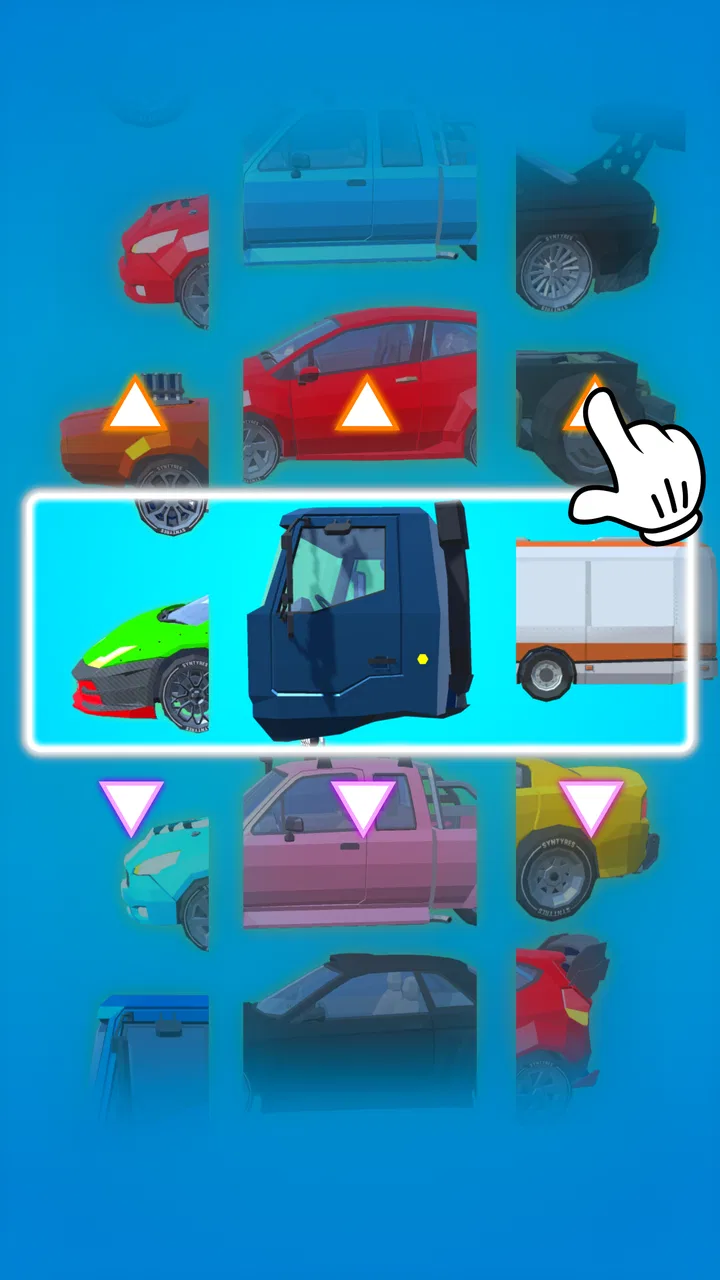
Crazy Rush 3D: Race Master is a high-octane racing game that challenges players to navigate through dynamic tracks filled with obstacles, jumps, and power-ups. The app offers a variety of cars to choose from, each with its own unique characteristics, and allows players to compete in exciting races against AI opponents or other players online.
02Is Crazy Rush 3D: Race Master free to download and play?
Yes, Crazy Rush 3D: Race Master is free to download and play on both Android and iOS platforms. However, the game offers in-app purchases that enhance the gaming experience, such as unlocking premium cars, removing ads, or acquiring special power-ups. These purchases are optional and not required to enjoy the game fully.
03What are the system requirements for Crazy Rush 3D: Race Master?
Crazy Rush 3D: Race Master requires Android version 5.0 and up, or iOS 10.0 or later. The game is optimized for both smartphones and tablets, ensuring a smooth gaming experience. It is recommended to have a device with at least 2GB of RAM for optimal performance, especially during intense racing sessions.
04Does Crazy Rush 3D: Race Master support multiplayer mode?
Yes, Crazy Rush 3D: Race Master features a multiplayer mode where players can compete against each other in real-time races. This mode requires a stable internet connection to ensure seamless gameplay. Players can also connect with friends through social media integrations to challenge them and compare scores on leaderboards.
05Are there any ads in Crazy Rush 3D: Race Master?
Crazy Rush 3D: Race Master includes ads as part of its free-to-play model. These ads appear between races or during certain gameplay pauses. Players have the option to remove ads by purchasing an ad-free version via in-app purchase. This allows for an uninterrupted gaming experience.
Pros
- Engaging and fast-paced gameplay.
- Intuitive controls for easy navigation.
- Vibrant graphics enhance experience.
- Variety of levels keeps it fresh.
- Frequent updates with new content.
Cons
- Contains in-app ads and purchases.
- Requires internet for full features.
- Can drain battery quickly.
- Limited character customization.
- Occasional lag on older devices.

Crazy Rush 3D: Race Master
Gallery